✨ Quick Answer
Is a silicone clip-on pot strainer worth buying?
A silicone clip-on strainer is a practical choice for home cooks in small kitchens or those looking to minimize cleanup. It effectively drains liquids from most pots and pans without the bulk of traditional colanders. However, users must ensure compatibility with thick-rimmed cookware and remain cautious of steam heat during use.
- Saves significant cabinet and dishwasher space compared to traditional colanders.
- Requires only one hand to pour, reducing the risk of spilling food into the sink.
- Check pot rim thickness; some heavy-duty cookware may not support the clips securely.
- Food-grade silicone handles high temperatures but doesn’t eliminate steam burn risks.
Is a Silicone Clip-On Pot Strainer Worth It? Read This Before You Buy
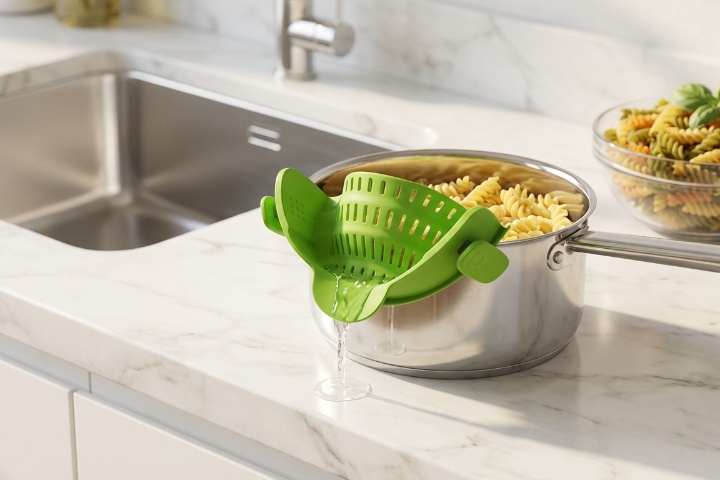
If you have spent any time on TikTok or Instagram Reels lately, you have likely seen a satisfying clip of someone effortlessly draining a pot of pasta with a small, crescent-shaped device attached to the rim. The Silicone Clip-On Pot Strainer has become a viral sensation, touted as the ultimate solution to the bulky, cabinet-cluttering traditional colander.

But as with many viral kitchen gadgets, the question remains: is it a genuine innovation that belongs in every kitchen, or is it just another plastic-and-silicone gimmick destined for the back of the junk drawer? This guide explores everything you need to know before adding this tool to your culinary arsenal.
Why This Product Is Suddenly Everywhere
The Silicone Clip-On Pot Strainer has captured the attention of millions primarily because it addresses one of the most common kitchen frustrations: the “clunky colander” problem. Traditional colanders are essentially large bowls with holes that take up a disproportionate amount of space in both the dishwasher and the kitchen cabinet.
Beyond storage, the viral appeal lies in the “one-handed pour.” In social media demonstrations, the ease of tilting a pot directly into the sink without needing to balance a separate strainer is visually appealing and suggests a level of efficiency that appeals to busy home cooks. It promises to solve the common issue of food—like delicate pasta or ground beef—spilling over the sides of a traditional strainer or accidentally falling into the sink drain.
However, it is important to understand what the product actually does. It is designed to filter out liquids while keeping solids in the pot. It is not designed for rinsing large batches of produce or for high-volume commercial cooking where a deep-well colander is still necessary.
Who This Product Is (and Is NOT) For
Who Should Consider It
- Apartment Dwellers: If you are living in a studio or a home with a small kitchen, cabinet space is a premium. This device is roughly one-quarter the size of a standard colander.
- Minimalist Cooks: If you prefer a “less is more” approach to kitchenware and want tools that can perform multiple roles or take up minimal physical footprint.
- Gadget Enthusiasts: For those who enjoy testing new ways to optimize their daily routines, the Silicone Clip-On Pot Strainer offers a low-cost entry point into kitchen automation.
- Users with Limited Grip Strength: Holding a heavy pot with one hand and a strainer with the other can be difficult. This tool allows for a more stable, two-handed grip on the pot handles during the pour.
Who Should Skip It
- Large Families or Batch Cookers: If you regularly cook 2+ pounds of pasta at once, the pressure of the water and the volume of the food may overwhelm the clip’s grip.
- Professional Chefs: In a high-speed commercial environment, the seconds spent clipping and unclipping may be less efficient than using a standard industrial colander.
- Users with Specific Cookware: If your kitchen is stocked primarily with thick-rimmed cast iron or heavy Dutch ovens, a standard Silicone Clip-On Pot Strainer may not fit securely.
Common Mistakes & What to Avoid
When buying or using a Silicone Clip-On Pot Strainer, there are several pitfalls that can lead to a messy kitchen or a safety hazard.
1. Ignoring Rim Thickness
Most of these strainers use a spring-loaded clip mechanism. These are designed for standard stainless steel or aluminum pots. If you try to force them onto a thick-walled ceramic pot or a Dutch oven with a wide lip, the clips may lose their tension over time or snap off during the pour, causing the strainer—and your dinner—to fall into the sink.
2. Underestimating Steam Risks
Because the Silicone Clip-On Pot Strainer requires you to tilt the pot toward you to monitor the flow, you are often closer to the rising steam than you would be with a traditional sink-standing colander. Always pour away from your body and ensure your hands are positioned on the pot handles, not near the silicone mesh.
3. Misjudging Heat Resistance
While most are made from food-grade silicone, not all are created equal. Some lower-quality versions may warp or retain odors if used with high-heat oil or boiling liquids for extended periods. Ensure any product you choose is rated for at least 450°F.
How to Choose the Right Product
If you have decided that a Silicone Clip-On Pot Strainer is right for your kitchen, consider these criteria to ensure you get a durable model:
- Clip Strength: Look for reinforced stainless steel clips rather than plastic ones. The tension needs to be strong enough to hold the weight of the food when the pot is fully inverted.
- Silicone Quality: Seek out 100% food-grade, BPA-free silicone. It should be flexible enough to bend to the shape of different pots but firm enough to maintain its structure.
- Design Shape: A “universal fit” or crescent design is generally superior to flat designs, as the curve allows the strainer to hug the side of the pot more closely, preventing leaks.
- Cleaning Requirements: Ensure the model is dishwasher safe. One of the main benefits is reducing cleanup time, so a hand-wash-only model defeats the purpose.
Product Category Breakdown
When shopping for a Silicone Clip-On Pot Strainer, you will typically encounter three variations within the category:
1. The Universal Crescent Strainer
- Problem it Solves: Fits various pot diameters ranging from small saucepans to medium stockpots.
- Key Features: Wide surface area, two clips, and a flexible silicone body.
- Typical Scenario: Draining pasta, rinsing fat from browned ground beef, or straining boiled potatoes.
2. The Snap-and-Drain Variant
- Problem it Solves: Provides a more rigid barrier for heavier foods.
- Key Features: Often features a sturdier plastic frame with a silicone mesh insert.
- Typical Scenario: Best for heavier items like large boiled vegetables where the weight might push a soft silicone strainer off the rim.
3. The Pour-Spout Attachment
- Problem it Solves: Inaccurate pouring that leads to drips and messes on the counter.
- Key Features: A smaller, focused spout that clips on to guide liquids into a small container.
- Typical Scenario: Draining grease into a jar for disposal or pouring sauce into a gravy boat.
Is It Worth Considering?
In the world of kitchen gadgets, the Silicone Clip-On Pot Strainer sits in a unique position. It is not an essential tool like a chef’s knife or a cast iron skillet, but it is also not a useless novelty.
The honest trade-off is one of convenience versus capacity. You gain significant storage space and a faster cleanup process. In exchange, you lose the ability to strain very large volumes of food and must be more mindful of pot compatibility and steam safety.
For the average home cook who makes pasta, vegetables, or grains a few times a week, the benefit of not having to wash a giant colander usually outweighs the minor learning curve of clipping the device on correctly.
Final Takeaway
Choosing a Silicone Clip-On Pot Strainer should be based on your specific cookware and the volume of food you typically prepare. While it may not replace a traditional colander for every single task—such as washing a large bowl of greens—it is a highly effective secondary tool for draining hot liquids safely and efficiently.
Before purchasing, verify the thickness of your most-used pots and look for a model with high-tension clips and heat-resistant certification. By managing expectations and using the tool as intended, you can reclaim your cabinet space and simplify your nightly cooking routine.
Viral Hashtags
#kitchenhacks#cookinggadgets#smallkitchensolutions#amazonfinds#kitchentools#organizedkitchen#apartmentliving#homecooking#chefhacks#productivityhacks#satisfyingkitchen#usefulgadgets#cookwaresolutions#minimalistkitchen
📧 Sign up here to receive the HotNewFinds weekly newsletter for useful advice on new products and noteworthy deals!
❤️ Businesses with innovative and unique products? Reach out to us. We'd love to feature your top-notch products too, keeping our high standards for all readers.